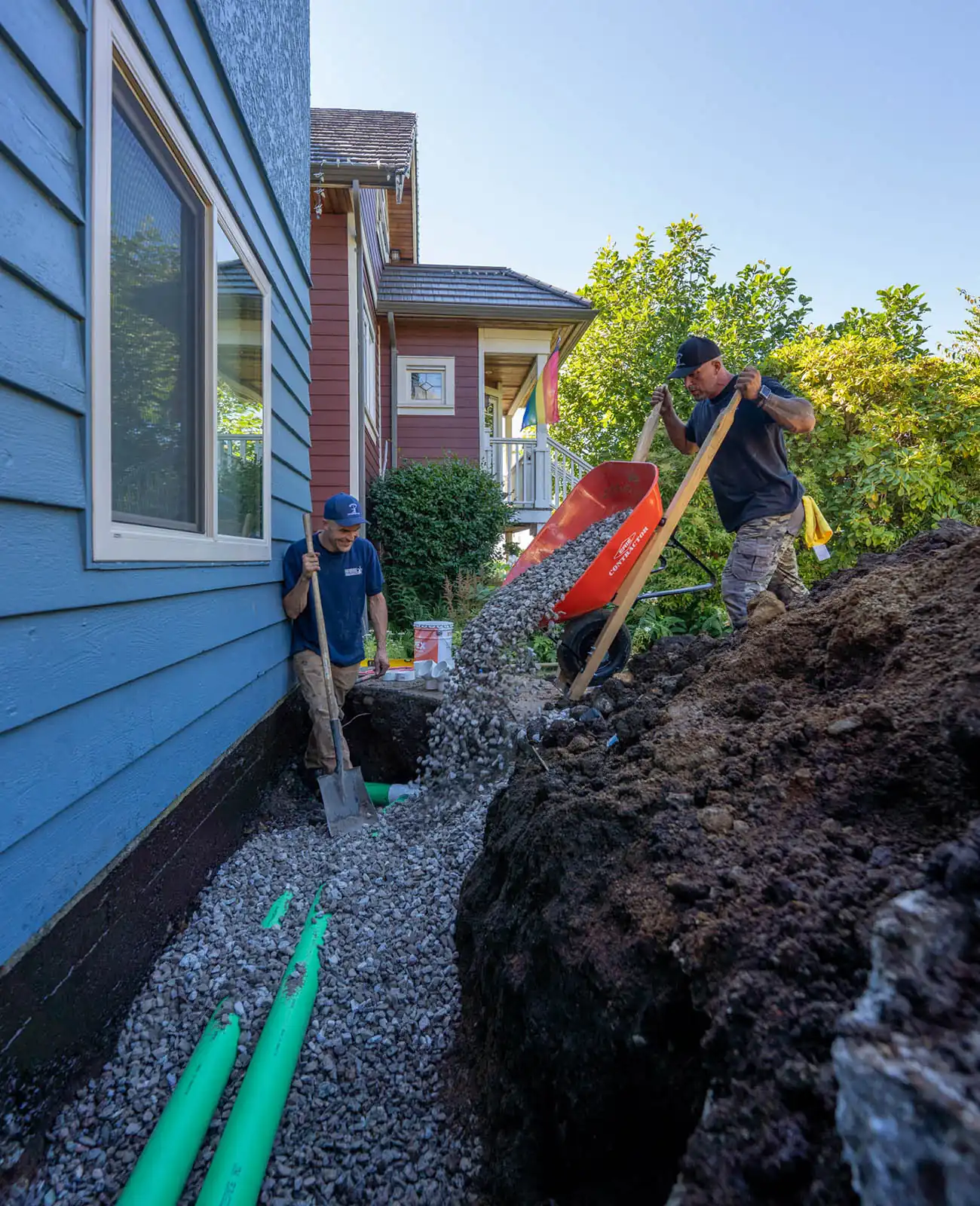
Perimeter Drainage & Drain Tile Repair in North Vancouver
The basement smells like damp concrete after a wet week, or it's started to flood outright.
- Google rating
- 5.0
- Verified reviews
- 104
- Service in
- English
Perimeter drain tile does one job — carry water away from the footing before it finds its way through the foundation — and it's built or serviced to local building code and environmental standards, not to a generic spec. Where a section has failed, the repair doesn't have to mean the whole run comes out: inspection and flushing can restore a system that's simply silted, and a partial rehabilitation is often the honest answer on an older house rather than a full perimeter replacement. Full excavation, landscaping and concrete work happen only where the repair genuinely calls for it.
Extremely happy with the work Modern Drainage performed. They identified the issue, rectified it and actually improved the outside access to our house. The crew were courteous and communicative and a pleasure to interact with. Highly recommend this company.
Recent work in North Vancouver
Mike Hartman's own photographs, job by job.
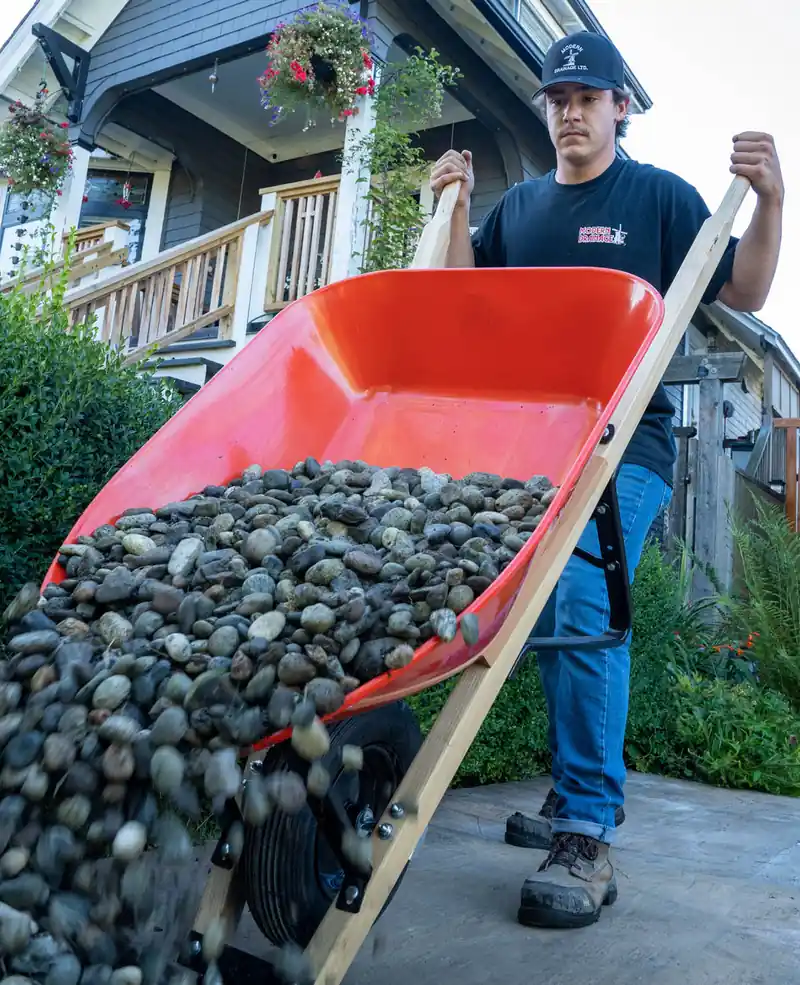
Drain rock, wheelbarrowed in one load at a time 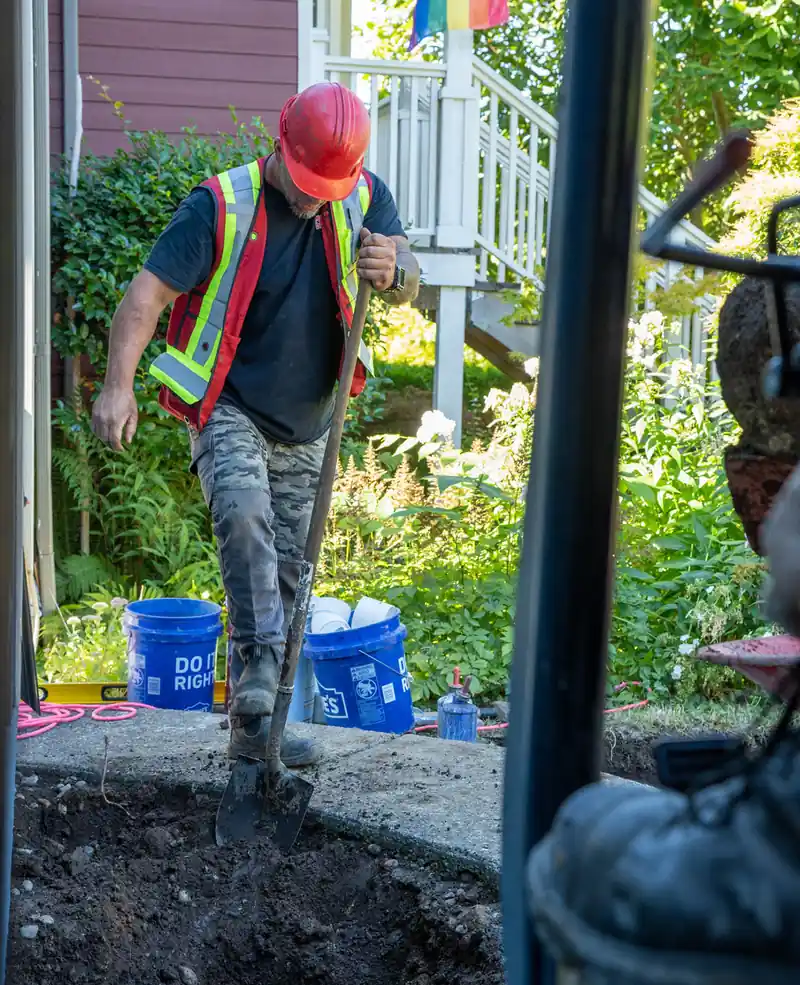
Opening the line by hand along the foundation
What to check, and what to ask
General guidance for homeowners, not specific to your system — worth knowing before you book anyone, including us.
-
Where the water enters is not where the problem is
Water can travel along a footing for metres before it finds a low spot to show itself. Note the corner it appears in and after how much rain, but do not assume that is where the failure actually is — that is what a camera or a dig test is for.
-
Full replacement is not the only outcome
A perimeter system installed decades ago can sometimes be repaired or partially rehabilitated rather than replaced end to end, depending on what a camera or an excavation test finds. Ask what determines full replacement versus a section repair before assuming the larger number.
-
Downspouts and grading are the cheapest thing to rule out first
A downspout that empties within a metre of the foundation, or ground that slopes back toward the house instead of away from it, can produce the same symptom as a failed drain tile. Worth ruling out before anything is dug up.
-
Ask how the permit and inspection side is handled
Perimeter drainage work that crosses onto municipal property, or a full excavation, generally needs a permit. Some contractors handle the paperwork as part of the job; others leave it to the homeowner. Worth knowing before you agree to the work, not after.
Try these first
-
1. Note exactly where and when the water shows up
Which corner, how much rain fell before it, and how long after the rain stopped. That pattern is the single most useful thing you can hand to whoever comes to look.
-
2. Check where your downspouts actually empty
Walk the perimeter and look at where each downspout discharges. If any empties within a metre of the foundation, or onto ground that slopes back toward the house, note it — that alone can produce this symptom.
-
3. Look at the grading around the house, without digging
Ground that slopes toward the foundation instead of away from it, even slightly, moves water in the wrong direction. Just look and note it.
-
4. Photograph any drain tile cleanout or inspection cap you can see
Many perimeter systems have an accessible cap at grade. Photograph its location and condition — do not open it — it saves time on the first visit.
-
5. Write down which rooms or areas are affected, and since when
A basement corner that has been damp for years is a different job than water that appeared suddenly last week. Both the location and the timeline matter.
Before you call
- My drainage system is 30 years old — do I need to replace the whole thing?
- If you are experiencing consistent issues with an older drainage system, replacement is often recommended, but not always necessary. We begin every project with a thorough system investigation.
- What's actually involved in a drain tile inspection?
- A section is opened where access is easiest, and the condition of the tile — silted, collapsed, root-fouled, or simply disconnected — decides whether the answer is a flush, a partial rehabilitation, or a full replacement. It's rarely obvious from the surface which of the three you're looking at.
Tell Mike Hartman what's going on
604-984-4343Mike Hartman will call you back on the number you left.
- Address
- 165 Amherst Avenue, North Vancouver, BC V7H 1S5
- Service Area
- North Vancouver · Burnaby · Vancouver · Coquitlam
- Hours
- Mon–Fri, from 8am